- Milford Physical Therapy 302-491-4196

- Millville Physical Therapy 302-539-3110
- Lewes Physical Therapy – King Street 302-200-9920
- Lewes Physical Therapy – Route 24 302-945-0200
- Berlin Physical Therapy 443-513-3910
- Annapolis Physical Therapy 410-295-4941
- Easton Physical Therapy 410-770-9720
- Salisbury – S Curve Physical Therapy 410-677-0700
- Kent Island Physical Therapy 443-909-5882

Endometriosis & Pelvic Floor Physical Therapy
Endometriosis is a complex, often misunderstood condition that affects 1 in 10 people of reproductive age, regardless of race. Despite its prevalence, many people suffer for years before receiving a proper diagnosis. At Aquacare, our pelvic floor therapists understand endometriosis — and we are here to be your advocate throughout your care journey.
What Is Endometriosis?
Endometriosis occurs when tissue similar to the lining of the uterus (the endometrium) grows outside the uterus. These endometriotic implants can develop on the ovaries, fallopian tubes, intestines, bladder, the lining of the pelvis, and have been identified in almost every organ of the body. The implants respond to estrogen, causing inflammation, pain, and — in some cases — fertility problems due to the formation of adhesions (scar tissue).
Symptoms of Endometriosis
- Severe pelvic pain, especially around menstruation
- Pain with intercourse (dyspareunia)
- Pain with bowel movements or urination
- Heavy or irregular menstrual bleeding
- Bloating and gastrointestinal discomfort
- Difficulty with reproduction and fertility
- Pelvic floor muscle tightness and guarding
How Does Endometriosis Affect the Pelvic Floor?
Patients with endometriosis frequently develop pelvic floor dysfunction as a secondary effect of chronic pain. The body responds to persistent pain by tensing the surrounding muscles — a protective mechanism that, over time, creates its own cycle of tightness, restricted blood flow, and worsening pain. This results in:
- Increased pelvic floor muscle tightness and reduced vascular flow
- Difficulty urinating or having bowel movements
- Painful intercourse
- Pain with movement and daily activities
Multiple research projects demonstrate that patients with endometriosis experience significantly improved pain relief and quality of life when treated with pelvic floor physical therapy — both during painful episodes and following surgery. Pelvic floor therapy works to break this pain cycle by restoring normal muscle function.
How Physical Therapy Treats This Condition
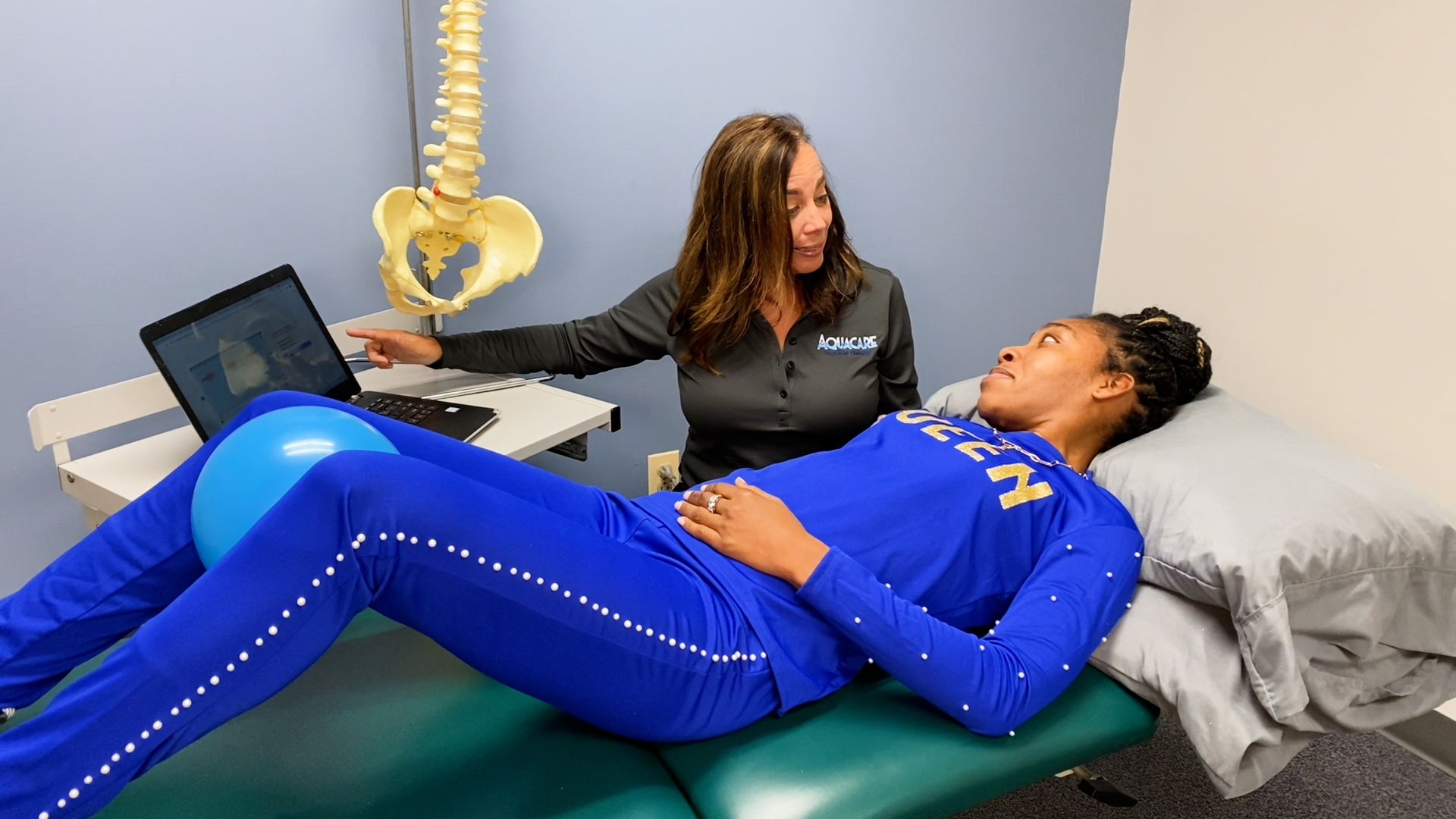
At Aquacare, your treatment plan is customized to your specific symptoms and goals. Common treatment approaches include:
- Manual Therapy — External and internal myofascial release, trigger point release, and muscle energy techniques to reduce tension, adhesions, and muscle dysfunction
- EMG Biofeedback Therapy — To retrain and re-educate the pelvic floor muscles, either strengthening weak muscles or relaxing overactive ones
- Pelvic Floor Strengthening & Relaxation Exercises — Including Kegels and other targeted exercises tailored to your specific needs
- Core Stabilization — Strengthening the surrounding hip, gluteal, and abdominal muscles to support pelvic function
- Postural Re-Education — Correcting faulty movement patterns that contribute to pelvic stress
- Patient Education — Understanding your condition, identifying problematic habits, and learning strategies to protect your progress
- Home Exercise Program — Targeted stretching and strengthening exercises to reinforce progress between sessions
We understand that the healthcare journey for endometriosis can be frustrating and isolating. Our pelvic floor therapists are here to guide you through the process, advocate for your needs, and provide the compassionate, knowledgeable care you deserve.
You don’t have to manage this alone.