

man playing pickleball

Kent Island Physical Therapy

Areas of specialty include joint replacement, sport’s injury/sport-specific conditioning, back/neck pain, post-op care for all joints, balance issues/fall prevention, women’s health, metabolic health, myofascial release, therapeutic yoga, and general wellness. Having issues with osteoarthritis? We can help.

We are your choice for Kent Island physical therapy – in and out of the water. We partner with Club One Fit for use of their therapeutic pool.

SCHEDULE YOUR FREE CONSULTATION


Prevent Injury with Assisted Stretching

Kent Island physical therapy is proud to offer physical therapist assisted stretching.

Without regular stretching, muscles can shorten and tighten, limiting their ability to extend fully during activity and increasing the risk of injury. Incorporating regular stretching into your routine can have numerous physical and mental benefits.

Here are some of the key benefits of regular stretching:
Improved flexibility and circulation: Lengthens muscles, enhances range of motion, and boosts both short-term and long-term circulatory health. Improved flexibility helps you move more freely and perform daily activities with ease. Enhanced circulation from regular stretching promotes better oxygen and nutrient delivery to your muscles, which can aid in recovery and reduce muscle fatigue. Improved blood flow also helps remove toxins from the muscle tissue, further enhancing recovery and performance.

Reduced injury risk: Stretching may lower the likelihood of muscular injuries by improving range of motion for sports and daily activities. Stretching prepares your muscles for the stress of exercise, reduces muscle stiffness, and increases flexibility, making it less likely for muscles and tendons to strain or tear.

Less joint and muscle pain: Stretching may alleviate and prevents pain by stretching the muscles. Regular stretching helps to relieve tension in tight muscles, reduces muscle soreness, and can alleviate chronic pain conditions such as lower back pain and arthritis.

Enhanced athletic performance: Stretching also helps in quicker recovery, reduces muscle stiffness, and increases overall endurance, making it easier to perform at higher levels for longer periods.

Increased relaxation and reduced stress: Stimulates the body’s relaxation response.

Better posture: Regular stretching helps correct muscle imbalances, reduces strain on the spine, and supports proper spinal alignment. This can lead to a more upright and balanced posture, reducing the risk of developing chronic pain conditions and improving overall body mechanics.


SCHEDULE YOUR FREE CONSULTATION
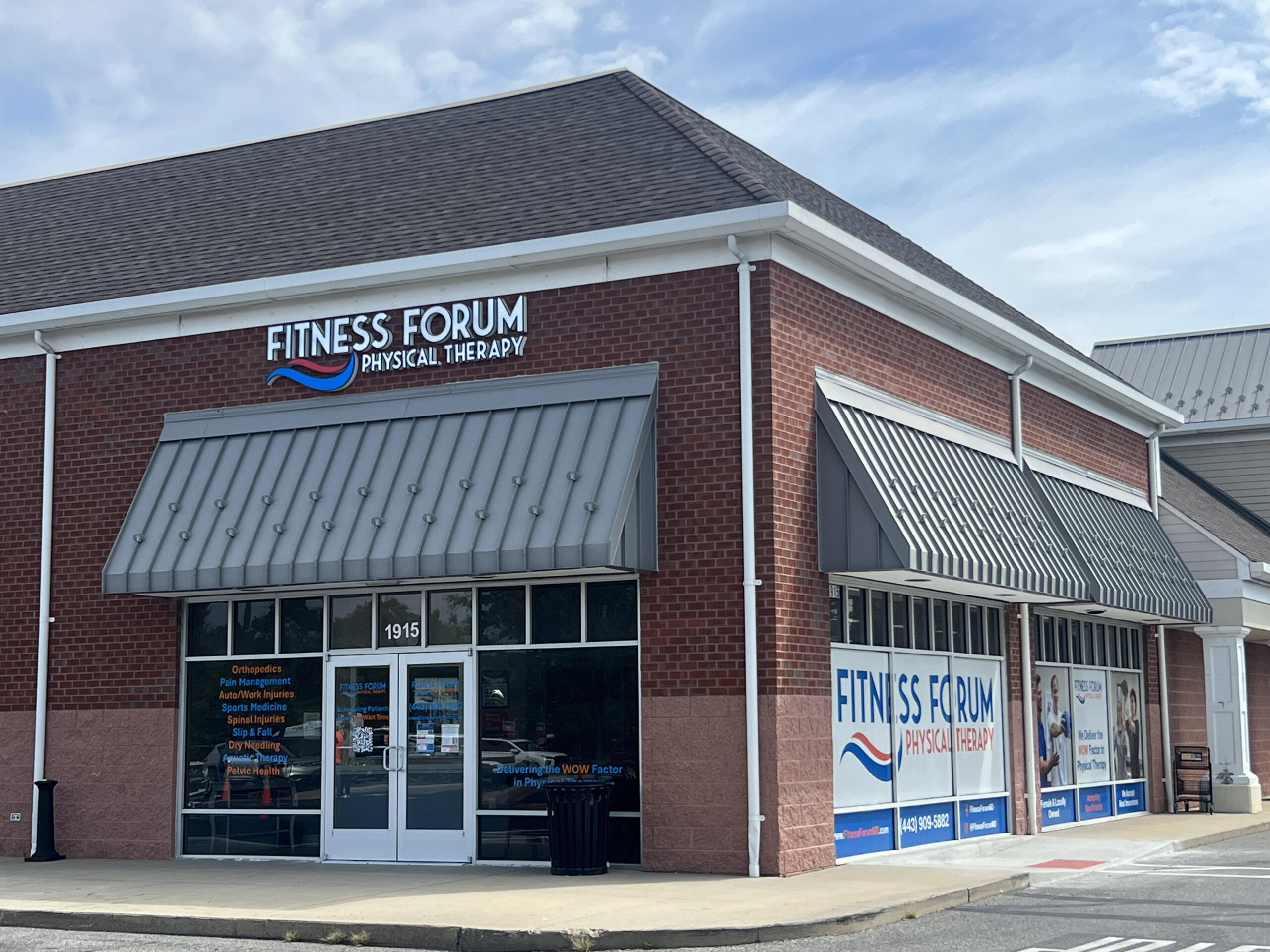
 

Fitness Forum Kent Island physical therapy provides:

Balance and Vestibular Services in Kent Island

Expert balance and vestibular services are now available with Kent Island physical therapy. Vestibular rehabilitation, a specialized form of physical therapy, is a proven method aimed at minimizing dizziness, enhancing balance, and mitigating the risk of falls by effectively restoring function to the inner ear, which plays a crucial role in maintaining equilibrium.

By employing tailored exercises and techniques, vestibular rehabilitation addresses various vestibular disorders, including benign paroxysmal positional vertigo (BPPV), labyrinthitis, and vestibular neuritis.

These targeted interventions not only alleviate symptoms but also empower individuals to regain confidence in their movements, thereby enhancing their quality of life. Discover how expertly crafted physical therapy interventions can provide sustainable relief and foster long-term stability for those grappling with balance and vestibular ailments.

Frequently Asked Questions

What can I expect?

What can I expect at my first physical therapy appointment?

Your first visit is an evaluation, and it is mostly a conversation. Your therapist wants to know what hurts, when it started, what you have already tried, and, just as important, what you are trying to get back to. Walking the beach without stopping. Finishing eighteen holes. Picking up a grandchild. Getting through a shift without your back seizing up. That goal shapes everything that follows.

From there, your therapist will look at how you move. Expect some hands-on assessment of strength, flexibility, balance, and joint motion, and expect to be asked to do a few simple movements so your therapist can see what your body is actually doing rather than guessing from a description.

By the end of that first visit, you will have a plan. Your therapist will explain what they found, what is likely causing it, roughly how often they would like to see you, and what recovery is going to ask of you. In most cases treatment starts that same day, so you leave having already done something about it, usually along with a short set of exercises to work on at home.

A few practical things:

  • Wear or bring clothes you can move in. If your knee is the problem, shorts help. If it is your shoulder, a tank top or short sleeves.
  • Bring your insurance card, a photo ID, a list of your medications, and any imaging reports or surgical notes you have.
  • Patient forms are available on our website ahead of time. Filling them out at home means more of your appointment goes toward you and less toward paperwork.
  • You do not have to be in perfect shape, in pain right that minute, or sure of what is wrong. Not knowing is a completely normal reason to come in.

Follow-up visits are working sessions. You and your therapist will build strength and mobility together, adjusting as your body responds, and you will get exercises to keep up between appointments. That home program is not filler. Patients who do it consistently tend to get better faster and hold onto the progress once therapy ends.

You will see the same therapist throughout. That continuity is the point, and it is a large part of why patients tell us therapy here felt different.

How long will I need physical therapy?

That depends on the injury, the surgery, your history, and your goals, so your therapist will give you a realistic range at your evaluation rather than a number pulled out of the air. What we can promise is that you will always know where you stand. Progress gets measured, and we talk about it out loud.

Usually not. Delaware and Maryland both allow direct access, which means you can start physical therapy without a physician referral. Some insurance plans still require one for coverage, so give us a call and we will check your plan before your first visit.

Because we love them, and love makes us careless. The pattern is almost always the same: starting the season too fast, skipping the warm-up, or playing one more game, one more hole, one more garden bed than the body was ready for. These are not weakness injuries. They are enthusiasm injuries, and they respond well to treatment.

Three things. It treats the pain you came in with, it finds the mechanical reason the injury happened in the first place, and it gets you back to the activity rather than merely away from the pain. That last part matters. Rest alone will often quiet a sore shoulder, but it will not fix the serve that made it sore.

One-on-one and an hour long, with the same therapist each time, in our fully equipped gym. Water therapy is also available in our nearby pool, which is often the better route if weight bearing is painful or you are early in recovery from surgery.

Yes, and please do. We offer free consultations for exactly this. You can talk it through with a therapist, find out whether physical therapy is the right step, and go from there with no obligation.