
Why Is Osteoporosis Called a Silent Disease?

You can’t feel your bones getting thinner. Most people have no symptoms until they break a bone, though some notice they’re losing height or developing a rounded upper back. A broken bone after age 50 from a fall at standing height, such as tripping on the sidewalk, can be the first sign of low bone density, and these fractures often go undiagnosed.

The numbers are sobering. According to the Bone Health and Osteoporosis Foundation, one in two women and up to one in four men will break a bone because of osteoporosis, and for women, that risk is greater than the risk of heart attack, stroke, and breast cancer combined.

Who Is at Risk for Osteoporosis?

Anyone can develop osteoporosis, but some factors raise your risk. These include being a woman past menopause or a man age 65 or older, a family history of osteoporosis, a small or thin frame, an inactive lifestyle, a diet low in calcium and vitamin D, certain medications such as corticosteroids, some chronic or digestive conditions, heavy alcohol use, and a history of breaking a bone as an adult. Women can lose up to 20 percent or more of their bone density in the five to seven years after menopause, when estrogen levels drop sharply.

Physical Therapy for Osteoporosis and Osteopenia

Worried That One Small Fall Could Mean a Broken Bone?

Maybe your doctor just handed you bone density results with a word you didn’t expect to hear. Maybe you’ve noticed you’re a little shorter than you used to be, or you’ve started holding back from activities you love because you’re afraid of getting hurt. A diagnosis of osteoporosis or osteopenia can feel unsettling, but it’s also a chance to take charge of your bone health.

At Aquacare and Fitness Forum Physical Therapy, our osteoporosis program helps men and women build stronger muscles, protect their bones, improve their balance, and move through daily life with confidence instead of fear.

What Is Osteoporosis, and How Is It Different From Osteopenia?

Osteoporosis happens when your body loses bone faster than it can replace it, leaving bones thinner and more fragile and more likely to break from a minor fall or bump. Osteopenia, also called low bone mass, is an earlier stage. Bones with osteopenia are weaker than normal but not as weak as with osteoporosis, and without treatment, osteopenia can progress to osteoporosis.

Both conditions are diagnosed by your physician with a bone density scan called a DXA or DEXA scan. On that scan, a T-score between -1 and -2.5 indicates osteopenia, and a score of -2.5 or lower indicates osteoporosis. Choose PT
How Can Physical Therapy Help With Osteoporosis?

Medication may be part of your treatment plan, but it can’t make you stronger, steadier, or more confident on your feet. That’s where physical therapy comes in. Weight-bearing and resistance exercise put healthy stress on your bones, which helps them maintain strength and prevent further bone loss. Your physical therapist designs that exercise safely for your body, your bone density, and your fracture history.

Physical therapy for osteoporosis focuses on three big goals: building bone and muscle strength, reducing your risk of falling, and teaching you how to move through everyday life in ways that protect your spine.

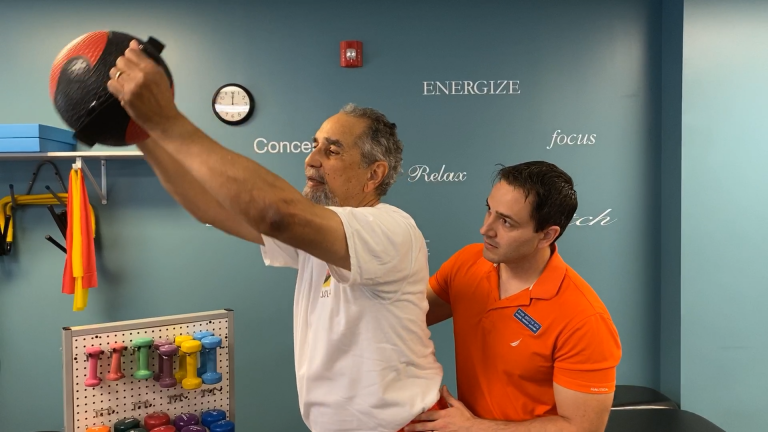
Physical therapist working with a patient who has osteoporosis
woman with neck pain in garden

What Happens in the Aquacare Osteoporosis Program?

Your care begins with a thorough evaluation by a physical therapist. We’ll look at your posture, strength, balance, and the way you move, and we’ll talk about your bone density results, any past falls or fractures, and what you want to be able to do. From there, you’ll attend a series of visits built around your needs.

Posture and body alignment. Good posture takes pressure off the spine, where many osteoporosis fractures happen. We’ll teach you how to find and hold healthy alignment and strengthen the back muscles that keep you upright. The Too Fit To Fracture consensus recommends endurance training for the muscles along the spine, along with daily balance training, for everyone with osteoporosis.

Strengthening bones and muscles. Your therapist will build a progressive strength and weight-bearing program matched to your fitness level. Guidelines adopted by APTA Geriatrics support progressive resistance training, alone or combined with impact exercise such as walking or jogging, along with static weight-bearing exercises like standing on one leg.

Balance training. A fall is often what turns fragile bones into a fracture, so balance training is central to your program. This can include walking heel to toe or sideways, practicing unusual stepping patterns, and learning to react when something throws you off balance.

Safe movement for everyday life. Bending to load the dishwasher, lifting groceries, pulling weeds, and getting out of bed all put demands on your spine. We’ll teach you spine-friendly ways to do the things you do every day, like hinging at the hips and pivoting with your feet, so you can stay active without putting your bones at risk.

Nutrition education. What you eat matters for your bones. APTA highlights calcium, vitamin D, and protein as key nutrients for bone health, found in foods like dairy, fortified foods, and leafy greens. We’ll help you understand how nutrition supports your exercise program and encourage you to talk with your physician about whether you need supplements.

Independent self-management. Our ultimate goal is to give you the knowledge and confidence to manage your bone health on your own. You’ll leave with a personalized home exercise program you can continue for years to come.

FAQs

The best program combines several types of exercise. For bone health, APTA suggests about 30 minutes of weight-bearing activity on most days of the week, with strength training on two or three of those days. Weight-bearing options include walking, hiking, dancing, pickleball, and stair climbing, and strength training can use dumbbells, resistance bands, or body weight. Balance and posture exercises round out the plan.

Your physical therapist will help you choose which activities are right for you. Someone with osteopenia who has never broken a bone may be ready for different exercises than someone who has had a spine fracture.

Some movements put extra stress on fragile spinal bones. The International Osteoporosis Foundation advises people at higher fracture risk to avoid deep backbends and forward bending of the spine, especially while carrying something, because it raises the risk of compression fractures in the vertebrae. Mayo Clinic lists toe touches and sit-ups as examples, and notes that golf, tennis, bowling, and some yoga poses can involve forceful bending or twisting at the waist.

That doesn’t necessarily mean giving up the activities you love. Your physical therapist can show you how to modify them so you can keep enjoying them more safely.

Yes. If you break a bone because of osteoporosis, physical therapy helps you heal and return to your normal activities. This matters a great deal after a hip fracture. About 300,000 people break a hip each year, and half of them don’t return to their previous level of activity. A structured rehab program helps you regain strength and mobility and lowers your risk of another fall.

At Aquacare, your physical therapist works with you one-on-one for your entire session. We never double book, so you get focused, hands-on guidance every visit. That matters when you’re learning to exercise safely with fragile bones. With more than 12 locations across Delaware and Maryland, expert bone health care is close to home.

Yes, with the right guidance. Exercise is one of the most important things you can do for your bones. Working with a physical therapist ensures your program is safe for your bone density and fracture history.

Exercise can help slow bone loss, and over time it may improve bone density. It won’t happen overnight, though. Measurable changes in bone density can take anywhere from six months to four years or more. Exercise also builds muscle strength and balance, which lowers your risk of falls and fractures in the meantime.